From Data to Meaning: My Journey into Machine Learning
From Data to Meaning: My Journey into Machine Learning and Knowledge Representation
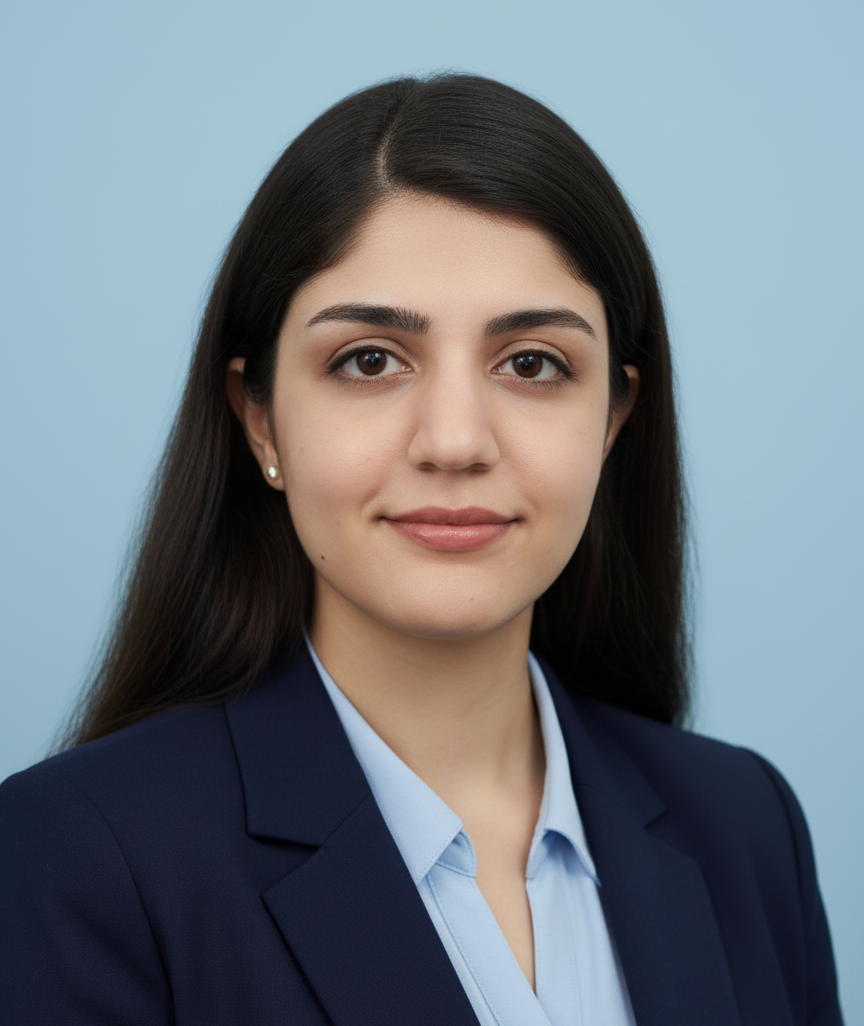
When I began my studies in Computer Engineering at Iran University of Science and Technology (IUST), I was fascinated by how code could automate simple decisions and simulate logic. At the time, I thought programming was mainly about solving structured problems with exact rules. Over time, however, I realized that much of our world — especially language, perception, and human reasoning — does not follow clear boundaries or deterministic logic. This realization was the beginning of my path toward machine learning and knowledge representation.
During my early undergraduate courses, subjects like Data Structures, Algorithms, and Artificial Intelligence taught me how data could be represented, processed, and learned from. I began to see the beauty in how models uncover hidden patterns that are not immediately visible to human observers. My first serious encounter with real data came through coursework projects, where I implemented classification and prediction models on modest datasets. Each experiment revealed that machine learning was not just about accuracy — it was about learning structure from apparent randomness.
Later, as I worked as a Teaching Assistant in courses such as Computer Vision and Operating Systems, I started to appreciate how algorithms interact with real-world constraints. Teaching deepened my understanding of the mathematical principles behind computation, and it helped me develop a discipline for clear reasoning and problem decomposition — essential qualities in research.
As I progressed, I became increasingly drawn to questions about meaning. How do machines understand language? How can we represent human knowledge in a way that computers can reason about it? These questions inspired my undergraduate thesis, “Transforming Text into Structured Knowledge: A Frame-Semantics and RDF-based Approach.”
In this project, I designed a pipeline that extracts semantic information from text using Semantic Role Labeling (SRL) and Entity Linking, then converts it into structured knowledge using RDF (Resource Description Framework). This process allowed raw text to be represented as interconnected triples — effectively turning unstructured language into interpretable data. I also explored the use of LLM-as-Judge evaluation, where large language models assist in assessing the quality of extracted knowledge, blending rule-based and neural approaches.
This work strengthened my belief that the next generation of intelligent systems should not only predict outcomes but also understand relationships, context, and meaning.
Parallel to my academic journey, I joined Ferrum Capital as a Data Scientist, where I apply machine learning models to real-world financial data for credit scoring and risk assessment. This experience helped me see how data-driven insights can shape decisions in industries where precision and ethics are both vital. While research focuses on discovering truth, applied data science is about creating value — and both require responsibility and interpretability.
Working with large-scale financial data also gave me the opportunity to practice reproducible experimentation, model optimization, and metric evaluation — skills that connect theoretical knowledge with practical deployment.
Today, my academic and professional goals converge on a single theme: creating AI systems that learn meaningfully and explain their reasoning. I’m particularly interested in the intersection of natural language processing, machine learning, and semantic knowledge representation — where computation meets human understanding.
As I move forward, I aim to continue exploring how structured knowledge, adaptive learning, and transparent models can bring artificial intelligence closer to human-like interpretation — not to replace human reasoning, but to amplify it.
Thank you for reading. This post marks the beginning of my personal research blog, where I plan to share insights, experiments, and reflections on AI, data science, and the pursuit of meaningful learning.
From Data to Meaning: My Journey into Machine Learning and Knowledge Representation